Gamified Learning: Making Education Fun and Engaging

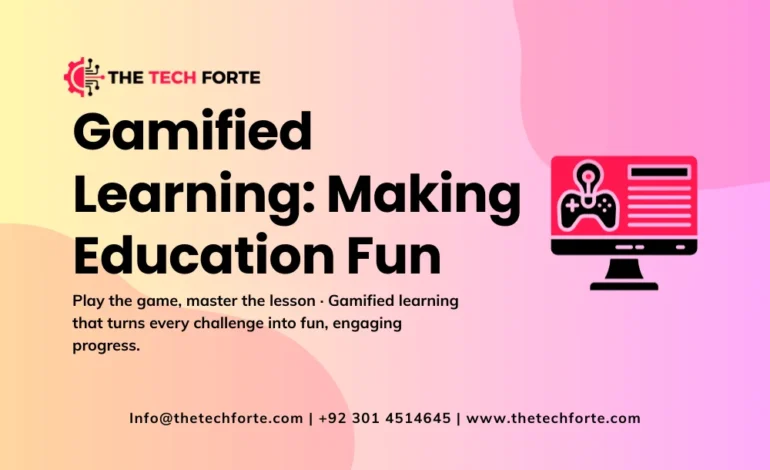
Gamified learning uses game elements in learning to turn lessons into experiences that feel more like play than work, while still aligning tightly with educational goals. When implemented well, gamification in education increases student engagement & motivation, strengthens knowledge retention, and builds soft skills such as collaboration, perseverance, and critical thinking skills.
1. What is gamified learning?
Gamified learning is the application of game elements in learning, such as points systems, badges & rewards, leaderboards, and challenges & quests, to non‑game educational contexts. It sits alongside, but is distinct from, game-based learning and educational games:
- Gamification in education: Adding game mechanics (points, badges, levels, progress tracking) on top of existing learning activities to make them more engaging.
- Game-based learning: Designing full educational games where gameplay itself embodies the learning objectives.
- Educational games: Purpose-built games that teach content or skills, used as stand‑alone activities or integrated into a curriculum.
All three can create interactive learning environments, but gamified learning typically starts by redesigning current lessons and assessments using gamification strategies rather than building a new game from scratch.
2. Motivation & engagement theory behind gamification
Gamified learning draws heavily on motivation & engagement theory, especially self‑determination theory and research on flow.
Key psychological drivers:
- Autonomy: Giving students choices (which challenge to tackle, which quest to unlock) increases ownership and intrinsic motivation.
- Competence: Points, experience points (XP), and clear levels & goals provide visible indicators of progress, satisfying the need to feel capable and improving perseverance.
- Relatedness: Multiplayer / social game features, team challenges, and cooperative quests foster social & collaborative learning.
- Flow: Well‑balanced challenges & quests that are neither too easy nor too hard sustain focus, a key condition for improved cognitive development and knowledge retention.
When educational games and gamification strategies align with these motivational principles, student engagement & motivation rise because learners feel immersed, challenged, and socially connected.
Core game mechanics in gamified learning
3.1 Points systems and experience points (XP)
Points systems and experience points (XP) are foundational game mechanics in gamified learning.
They can be used to:
- Reward completion of tasks, correct answers, or meaningful participation.
- Provide granular, instant feedback on performance, showing students how every action contributes to progress.
- Track growth over time, supporting progress tracking and personalized learning experiences.
XP systems often tie into levels & goals, where reaching a certain XP threshold unlocks new content, privileges, or challenges & quests.
3.2 Badges & rewards
Badges & rewards recognize specific achievements:
- Mastering a topic, completing a difficult challenge, contributing to collaboration & teamwork, or demonstrating soft skills development (e.g., leadership).
- Badges can be visible to peers (e.g., in a profile) or private, depending on the desired emphasis on competition vs mastery.
Thoughtful badge systems go beyond sheer quantity; they reward meaningful learning behaviors and encourage perseverance and active learning & problem solving.
3.3 Leaderboards
Leaderboards rank learners based on points, XP, or achievements.
Benefits:
- Can create healthy competition and increased participation when used carefully.
- Make progress visible and can spark friendly rivalry that boosts student engagement & motivation.
Risks:
- Overemphasis on competition may demotivate learners who are consistently at the bottom or who prefer collaborative environments.
- Inclusive design often uses multiple leaderboards (e.g., “most improved,” “top collaborators”) rather than a single high‑score list.
Balancing game design with learning objectives often means using leaderboards selectively and pairing them with cooperative challenges & quests.
3.4 Levels & goals
Levels & goals structure the learning journey like a game campaign:
- Levels correspond to mastery of certain topics or skill bands.
- Goals are clearly visible milestones, making learning pathways transparent.
- Unlocking higher levels provides a sense of achievement and encourages perseverance.
This framing supports progress tracking and helps students understand where they are and what comes next, improving planning and enhanced memory and recall via spaced practice.
3.5 Narrative & story-based learning
Narrative & story-based learning transform a course into an unfolding story:
- Students take on roles (scientist, explorer, entrepreneur) aligned with course themes.
- Challenges & quests become episodes in a larger storyline.
- Decisions have consequences within the narrative, enhancing critical thinking skills and cognitive engagement.
Well-designed stories make content more memorable by embedding abstract concepts within concrete, emotionally engaging contexts, which supports improved knowledge retention.
3.6 Multiplayer / social game features
Multiplayer / social game features harness collaboration & teamwork:
- Team-based quests, guilds, or houses competing cooperatively for collective goals.
- Peer review mini-games where students rate and give feedback on each other’s work.
- Cooperative puzzles requiring diverse skills to solve.
These mechanics support social & collaborative learning, soft skills development, and encourage students to support peers rather than only focus on individual scores.
3.7 AR/VR experiences and interactive learning environments
Augmented Reality (AR) / VR experiences add immersive layers to gamified learning:
- AR overlays digital information on physical spaces (e.g., interactive educational walls and scavenger hunts in school corridors).
- VR tools place learners inside simulated environments (historic events, science labs, virtual field trips).
Combined with game mechanics, AR/VR helps create interactive learning environments where learners explore, experiment, and solve problems in rich contexts, increasing active learning & problem solving and cognitive development.
4. How gamified learning improves learning outcomes
Research and classroom practice highlight several consistent benefits when gamification in education is well-implemented.
4.1 Student engagement & motivation and increased participation
Gamified learning makes tasks feel more like challenges than chores, which boosts student engagement & motivation.
- Interactive educational games and game-based learning environments are inherently more attention‑grabbing than static lectures.
- Immediate rewards and visible progress (points, XP, progress bars) encourage increased participation even from previously passive students.
Because learners see their actions directly linked to progress, they are more willing to try, fail, and try again.
4.2 Improved knowledge retention, enhanced memory and recall
Gamification supports improved knowledge retention and enhanced memory and recall through:
- Repetition embedded in varied challenges & quests rather than rote drilling.
- Emotional engagement and narrative & story-based learning that anchor facts to memorable contexts.
- Active learning & problem solving, where students apply concepts in meaningful tasks rather than merely listening.
Experiences that require decision‑making, feedback, and reflection tend to produce deeper learning than passive exposure.
4.3 Collaboration & teamwork, critical thinking skills, and soft skills development
Multiplayer / social game features foster:
- Collaboration & teamwork through cooperative missions, team leaderboards, and shared goals.
- Critical thinking skills via puzzles, simulations, and strategy‑based educational games.
- Soft skills development such as communication, leadership, negotiation, and conflict resolution in team challenges.
Gamified learning thus complements cognitive development with socioemotional growth.
4.4 Personalized learning experiences and adaptive / personalized gameplay
Gamification can support personalized learning experiences and adaptive / personalized gameplay:
- Dynamic difficulty adjustment based on performance: tasks become harder or easier to keep learners in the optimal challenge zone.
- Optional side quests let advanced students explore deeper topics while others focus on core goals.
- Learners can pursue personalized learning paths within a broader game map, increasing ownership and relevance.
Adaptive systems that tailor feedback and pacing can improve outcomes for both struggling and high‑achieving learners.
4.5 Encouragement of perseverance and growth mindset
In well-designed gamified systems, failure is reframed as part of the process:
- Students can “respawn,” retry levels, and refine strategies, mirroring game loops.
- Immediate feedback and visible progress encourage them to view setbacks as temporary, promoting encouragement of perseverance and growth mindset.
Over time, this normalizes experimentation and reduces fear of making mistakes, which benefits long‑term learning.
5. Real-world examples of gamification in education
5.1 Kahoot!
Kahoot! is a widely used platform that turns quizzes into fast‑paced game-based learning experiences.
Key features:
- Points systems for speed and accuracy.
- Leaderboards after each question, driving excitement and competition.
- Instant feedback and visible progress.
Kahoot! exemplifies how simple game mechanics can transform review sessions into interactive learning environments that boost engagement and recall.
5.2 Duolingo
Duolingo is a language‑learning app built entirely around gamified learning and educational games.
Mechanics include:
- XP, streaks, and levels & goals that track progress.
- Badges & rewards for milestones such as consecutive days studied.
- Bite‑sized challenges & quests (short lessons) with instant feedback.
Duolingo shows how personalized learning experiences and adaptive / personalized gameplay can keep learners engaged over long periods, even outside formal schooling.
5.3 Minecraft: Education Edition
Minecraft: Education Edition turns an open‑world game into a flexible educational platform.
Uses:
- Simulating historical sites, ecosystems, or engineering challenges.
- Encouraging collaboration & teamwork as students build and solve problems together.
- Embedding quests that require critical thinking skills and creative solutions.
This kind of game-based learning uses an existing educational game platform to host diverse subjects in a highly interactive learning environment.
5.4 Interactive educational walls and VR tools
Schools and museums increasingly use interactive educational walls / VR tools:
- Wall displays that respond to touch or movement with educational mini‑games.
- VR field trips and simulations where learners explore environments and solve challenges.
These digital classroom tech & gamified LMS add a physical dimension to gamified learning and can be integrated with classroom rewards and achievements.
6. Designing effective gamification strategies
Good gamification in education is intentional, not cosmetic. Effective gamification strategies start from learning objectives and then layer in game mechanics.
Key principles:
- Align game design with learning objectives
- Decide which concepts or skills each game mechanic reinforces (e.g., points for practice, badges for mastery, leaderboards for engagement).
- Balance challenge and skill
- Use adaptive / personalized gameplay where possible to avoid boredom or frustration
- Provide meaningful feedback
- Ensure instant feedback communicates more than “right or wrong” by offering hints, explanations, or next steps.
- Support different learner profiles
- Offer both competitive and cooperative options to accommodate various motivation styles.
- Make progress visible
- Use dashboards, maps, or progress bars to show short‑term and long‑term goals
Instructors who plan game mechanics around pedagogy, rather than bolting them on at the end, create richer, more coherent learning experiences.
7. Technology platforms and gamified LMS
Gamified learning often runs on a gamified LMS (Learning Management System) or is supported by digital classroom tech and external platforms.
Typical LMS features for gamification:
- Built‑in points systems, badges, and leaderboards across courses.
- Progress tracking dashboards for students and teachers.
- Integrations with tools like Kahoot!, Duolingo, or Minecraft: Education Edition.
A well-designed gamified LMS becomes the hub of interactive learning environments, linking game-based learning, educational games, and traditional assignments into a unified experience.
8. Challenges and potential motivational drawbacks
Despite the benefits, gamification in education is not risk‑free.
8.1 Overemphasis on competition
Overemphasis on competition can:
- Demotivate learners who consistently rank low on leaderboards.
- Foster unhealthy comparison rather than growth mindset or collaboration & teamwork.
Mitigations:
- Mix cooperative and competitive elements.
- Highlight “personal bests” and “most improved” metrics, not only top scores.
8.2 Balancing game design with learning objectives
If game mechanics overshadow content:
- Students may focus on “winning the game” rather than mastering the material.
- Superficial engagement might mask shallow understanding.
Balancing game design with learning objectives involves constant calibration of rewards, difficulty, and feedback to ensure learning remains central.
8.3 Accessibility / inclusive design and technology access issues
Accessibility and technology access issues are significant:
- Not all students have robust devices or internet, limiting access to high‑tech educational games and AR/VR experiences.
- Some game interfaces may be difficult for students with visual, motor, or cognitive disabilities without inclusive design.
Inclusive gamified learning plans for low‑tech alternatives, supports multiple interaction modes, and ensures that core progress is not gated behind expensive hardware.
8.4 Potential motivational drawbacks
Other motivational drawbacks include:
- Over-reliance on extrinsic rewards (points, badges) undermining intrinsic interest if not carefully managed.
- Fatigue if game elements are repetitive or feel manipulative.
To counter this, educators blend extrinsic triggers with intrinsic motivators (curiosity, autonomy, meaningful challenges) and regularly refresh content and quests.
9. Gamified learning across ages and contexts
Gamification strategies are flexible across age groups and learning settings:
- Primary and secondary education: Story‑based class quests, point systems for participation, game-based learning activities in core subjects.
- Higher education: Simulations, case-based educational games, gamified LMS structures for complex projects.
- Corporate and professional training: Scenario-based modules, achievement badges for skill certifications, leaderboards to spur completion of optional learning.
In each context, game mechanics are tuned to learners’ maturity, goals, and time constraints.
10. Cognitive development, soft skills, and long-term impact
Gamified learning supports both cognitive development and soft skills development:
- Cognitively, it encourages active learning & problem solving, critical thinking skills, and the application of knowledge in varied contexts.
- Socially, it builds communication, negotiation, empathy, and collaboration & teamwork, particularly in multiplayer / social game features.
Over the long term, these experiences help learners become more self‑directed, resilient, and socially adept, qualities valuable beyond the classroom.
Conclusion: Gamification as a path to deeper engagement
Gamified learning demonstrates that serious learning and fun are not opposites; when game elements in learning are thoughtfully designed, they reinforce each other. By leveraging gamification in education, through points systems, badges & rewards, leaderboards, narrative & story-based learning, and adaptive/personalized gameplay, educators can create interactive learning environments that increase student engagement & motivation, deepen knowledge retention, and develop both cognitive and soft skills.
Tools like Kahoot!, Duolingo, Minecraft: Education Edition, and emerging AR/VR experiences show how educational games and gamification strategies can make learning feel more like an adventure than a chore. The challenge now is not whether to use gamified learning, but how to implement it responsibly, balancing game design with learning objectives, ensuring accessibility / inclusive design, and harnessing game mechanics to build not just better test scores, but more curious, persistent, and collaborative learners.