Introduction:
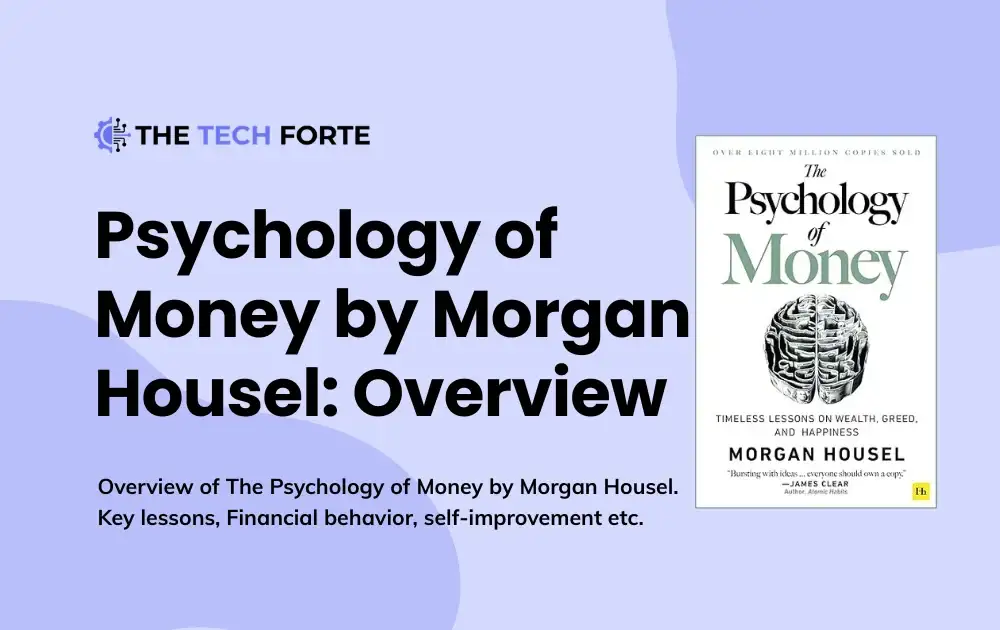
The Psychology of Money by Morgan Housel is one of the most influential personal finance books of the modern era. Unlike traditional finance books that focus on formulas, stock picking, or complex investment strategies, this book explores how human behavior, emotions, and decision-making influence financial success.
Through engaging stories and real-life examples, Housel explains that managing money is less about intelligence and more about behavior. The book teaches readers how to build wealth, avoid common financial mistakes, and develop a healthy relationship with money.
Suggested Read: Risk Management in Investing: Essential Strategies for Beginners
Overview:
Humans, and everything we do, are influenced by psychology in one way or another. Doctors interact with a wide variety of patients, marketers promote their products and services, supervisors communicate with and persuade workers to take extra shifts on construction sites, and even corporate elites make major decisions regarding financial products and policies. Despite the diversity of these activities, they all have one thing in common: psychology. Financial matters, or simply matters related to money, are also deeply connected to human psychology.
Human psychology tells us that we, as sapiens, tend to remember stories far better than numbers or facts. This is one of the most distinctive aspects of the book. While the author does discuss facts and data, the primary focus is on explaining concepts and ideas through engaging stories. Rather than overwhelming readers with statistics, he uses real-life examples and narratives to illustrate his opinions and insights, making the lessons more memorable and relatable.
Purpose of This Book
The primary purpose of The Psychology of Money is to help readers understand that financial success is not solely determined by how much they earn or how smart they are. Instead, it depends largely on:
- Financial discipline
- Emotional control
- Patience
- Long-term thinking
- Consistent habits
Morgan Housel emphasizes that wealth is often created through simple decisions repeated over time rather than complex investment strategies.
Risk vs Luck
The world we live in is enigmatically complex and often unfair. Risk and luck are like two brothers, each equally likely to influence a person’s life. Consider the story of Bill Gates and his school friend, Kent Evans. Both were fortunate to attend Lakeside School in Seattle, which had access to a computer in 1968 — something that even many universities did not have at the time. Bill Gates later remarked, “If there had been no Lakeside, there would have been no Microsoft.”
Kent Evans was equally talented and shared Gates’s passion for computing. Gates even believed that Evans would have been his co-founder at Microsoft. However, Kent died in a mountaineering accident before graduating from high school. While both Gates and Evans experienced the one-in-a-million luck of having early access to advanced computing technology, Evans also encountered the one-in-a-million misfortune of a fatal accident. Gates, on the other hand, lived on to build one of the world’s most successful companies.
The lesson is that risk and luck are inseparable companions. We often celebrate success and attribute it solely to talent, hard work, and intelligence, but chance — both good and bad — plays a far greater role in our lives than we usually acknowledge.
Man in the Card Paradon
One of the most insightful lessons is that people often pursue wealth and luxury not because they truly desire expensive possessions, but because they seek the respect and admiration of others. Through experience as a valet, Morgan Housel observed that when people see a Ferrari, Lamborghini, or other luxury car, they rarely admire the owner; instead, they imagine themselves in the driver’s seat and how such a possession might elevate their own status.
This creates a paradox: while many use wealth as a signal to gain recognition, observers are often focused on their own aspirations rather than on the person displaying that wealth. Housel’s message is not that wealth or luxury is undesirable, but that if respect and admiration are the ultimate goals, material possessions are unlikely to provide them. Qualities such as humility, kindness, empathy, and strong character are far more effective in earning genuine respect than any expensive car, watch, or mansion.
Wealth is invisible
The author of The Psychology of Money thinks that wealth is often invisible. People frequently judge financial success by visible signs such as luxury cars, large houses, designer clothes, or lavish lifestyles, but these outward displays reveal little about a person’s actual financial position. True wealth is not what you spend but what you save and invest. A person driving an expensive car may appear wealthy, yet they may have accumulated debt or sacrificed savings to afford it. Conversely, genuinely wealthy individuals often live modestly because their wealth exists in assets, investments, and money that has not yet been spent.
Housel distinguishes between being rich and being wealthy: being rich means having a high income and the ability to spend, while being wealthy means having financial assets that provide future options, flexibility, and independence. Since wealth is hidden, it is difficult to observe and imitate, causing many people to pursue the appearance of success rather than the financial security they truly desire.
Why This Book Is Important
Many people believe that becoming wealthy requires extraordinary talent or insider knowledge. This book challenges that belief by demonstrating that ordinary people can achieve financial success through proper behavior and decision-making.
Key lessons include:
- Saving is more important than showing off wealth.
- Time is the most powerful factor in investing.
- Compounding can create extraordinary results.
- Avoiding major mistakes is often more valuable than seeking huge gains.
- Financial freedom provides more happiness than material possessions.
Best Book for Business-Minded People
Entrepreneurs, business owners, and professionals can benefit significantly from this book.
The book teaches business-minded individuals how to:
- Make rational financial decisions
- Manage business risks effectively
- Think long-term rather than focusing on short-term profits
- Develop financial resilience during economic uncertainty
- Understand the role of patience in wealth creation
For business owners, the book serves as a practical guide for balancing ambition with sound financial judgment.
Self-Improvement Lessons from The Psychology of Money
One of the reasons this book remains popular is its strong focus on personal development.
1. Learn Patience:
Successful investing and wealth building require patience. The book explains why quick riches are often temporary, while consistent habits create lasting success.
2. Control Emotions:
Fear and greed are responsible for many financial mistakes. Learning emotional discipline can improve both financial and personal decision-making.
3. Focus on Long-Term Goals:
Short-term market fluctuations and trends can distract people from their financial objectives. The book encourages readers to maintain a long-term perspective.
4. Practice Humility:
Financial markets are unpredictable. Humility helps investors avoid overconfidence and make wiser decisions.
5. Value Financial Independence:
The ultimate goal of money is not luxury but freedom; the freedom to make choices without financial pressure.
Key Lessons from the Book
Wealth Is What You Don't See
Many people mistake expensive cars, luxury homes, and designer products for wealth. Housel explains that real wealth is often invisible and consists of savings, investments, and financial security.
Compounding Is Powerful
Small, consistent investments can grow into significant wealth over time. Patience allows compound growth to work effectively.
Luck and Risk Matter
Success and failure are often influenced by factors beyond our control. Understanding this helps us remain balanced and realistic.
Save More Than You Think You Need
Saving creates flexibility and prepares individuals for unexpected challenges and opportunities.
Financial Freedom Is the Ultimate Goal
Money should be viewed as a tool that provides options, flexibility, and peace of mind rather than merely a means of purchasing things.
Who Should Read This Book?
This book is ideal for:
- Entrepreneurs
- Business owners
- Investors
- Students
- Working professionals
- Self-improvement enthusiasts
- Anyone interested in personal finance
Whether you are just starting your financial journey or already have investment experience, the lessons remain highly relevant.
A Few Points Takeaway:
While I was reading it, a friend of mine asked me to give some points on this book, so here are a few points, for her and others who don’t want to read this book in depth, a whole overview.
- Define what's enough for you.
- Money chases maximum returns.
- What we see is either debt or expense; wealth is hidden.
- Being wealthy is important, but staying wealthy equally is.
- Wealth offers us freedom to do what we want, when we want, where we want, and with whom we want.
- Tails Event: Few wins will always overcome many losses.