Introduce the company:
Unilever is a British multinational company that operates in the consumer goods. The headquarters of the company is in London, England. The products of the Unilever company are food, condiments, cleaning agents, energy drinks, consumer healthcare, instant coffee, beauty products, and personal care. The company is the largest producer of soap all over the world.
The company’s all products are available in the global market in almost 190 countries. Breakfast cereals and beauty products are also the key terms that affect the progress of the industry. It is a public limited company that traded as LSE: ULVR, EURONEXT, NYSE: UL, FTSE 100 components, and AEX components. The products and operations of the Unilever firm relate to the industry of consumer goods. The Lever brothers and Margarine Unilever are the main predecessors of the company.
The company was founded in the year 1929, almost 93 years ago. William Lever and Johann Schicht are the main founders of the company. The company served the worldwide area and targeted the global market in a limited market. Foods, condiments, ice cream, energy drinks, tea, and baby food are also among the products offered by the Un8ieover company in the global market.
The revenue of the company in the year 2026 is 12.6 billion euros that represent the financial performance and is strong, and it creates more opportunities for the businesses in the future, that raise the entire growth practices of the businesses. The company is targeting brands worldwide. Lifebuoy, Dove, Sunsilk, and Lux are the main brands that are involved in the entire product and production process of the business.
The company is organized into the 3 main divisions. Foods and refreshments, home care products, and beauty or personal care are the three main divisions of the company that explore the change and organize the overall plans for the future. The Unilever company generates higher success by defocusing on the needs and wants of the customers, which are the integral elements of the business.
The success of a company refers to the advanced terms and obtaining the most required areas of success, as it leads the flow of the business operations. There are a lot of operations that affect the progress and performance of the business related to the given or most valuable success positions. The United Kingdom and the United States are the main targeted market that expresses the clear or most reliable plan of the firm.
Suggested Read: Leading Through Digital Disruption of Adidas: Innovation and Growth
Five-year performance of the Unilever company:
Unilever's global revenue (turnover) has fluctuated between €50.5 billion and €60.8 billion over the past five years, impacted by currency headwinds and portfolio restructuring. The company operates a global consumer goods business spanning Beauty & Wellbeing, Personal Care, Home Care, and Foods.
Global Revenue Performance:
Unilever (Group) reported the following annual revenue milestones over the last half-decade:
- 2025: €50.5 billion
- 2024: €60.8 billion
- 2023: €59.6 billion
- 2022: €60.1 billion
- 2021: €52.4 billion
Introduce the macro environment relating to the Unilever company:
The macro environment of the company represents the external factors that affect the performance of the business and the overall growth practices. The model of PESTEL analysis examines the key difficulties and complications that the company faces as external factors.
The company must abide by the key contents related to the external environmental factors and explore the most required change in the given options. Political, economic, social, technological, environmental practices legal aspects are the key factors that affect the performance of the business through the external environment.
- Political: The subject of Unilever is the regulations and restrictions, with the guidelines developed by the European Commission as well as the Food and Drug Administration. The company is liable to all the local and regional laws within the boundaries of the European region. Different political restrictions affect Unilever in political aspects. Regarding imports, exports, and trade laws, policies are restricted by the broad term that affects the firm’s progress.
- Economical: The consumers of Unilever directly impact the products that it supplies. The cash flow and profit of the company will be negative if the products are not in demand. The inflation and whims of consumers are the two points that affect the business's values and political change.
- Social factors: The Unilever company decided to focus on generating a better reputation, emphasizing the issues related to the environment as well as social aspects. Considering the products of Unilever are focused on personal care and well-being, which maintain overall and sustainable change. The change of preferences of the customers, the rate of growth of the population of the customers, and the social changes directly affect the business values and its progress.
- Technological factors: The Unilever company is consistently producing new products and sells them through online media. With the consistent production of the new pod cuts and selling them by using advanced or digital media, the company can get reliable plans. See the negative options and the hitting the profit, the company’s internal and external environment can be obtained. Research and development, starting their own technological activities, and the generation of higher online advancements are the main terms as clear options. The company is consistently compared to its advanced and reliable competitors. They spend more time on the actual plan related to the advanced visions. The success and growth of the business can be varied by determining the advanced methods.
- Environmental factors: The Unilever company promotes renewable as well as sustainable resources that are designed to be safe for consumers in every location where they distribute. The materials are eco-friendly from the packaging to the design. They want to be seen as an environmentally friendly organization and have worked for the last two years to decide to do so.
- Legal factors: As a consumer goods company, Unilever is subject to many laws and legalities. The company owns over four hundred food and healthcare brands. Each brand and its store’s location must follow the safety laws, copyright, and the health of the employees regarding the laws.
Introduce the industry of the chosen company:
Unilever company is related to the industry of consumer goods. The fast-moving consumer goods market is one of the largest and most highly competitive markets in the world. With a population of over 1.3 billion, the industry targets a large customer base and properly understands the market dynamics to succeed in the future.
- The threat of substitutes: The Unilever company runs its operations in the international market, which runs its operations all over the world. The company’s substitutes affect the progress and the demands of the customers.
- The threat of new entrants: This force considers how easy or difficult it is for new markets or players to enter the market. In the consumer goods industry, the barrier to entry is high due to the strong brand loyalty, distribution networks, and economies of scale.
- The bargaining power of suppliers: It is the force that looks at how much control suppliers have over the quality and the prices of the products as the input materials. In the industry of consumer goods, there are a large number of suppliers, and the bargaining power of suppliers is very limited.
- The bargaining power of buyers: It is the force that examines how much control buyers have over the prices as well as the quality of the products. In the market of consumer goods, due to the availability of a large number of products and brands explore the operations in certain or most reliable aspects. The process of bargaining power and interest is leading to the broad aspects or values related to the core decisions.
- Rivalry among the existing g competitors: It is a force that looks at the intensity of competition among the existing suppliers of the market. The competition is high due to the large number of market players and the more competitive market situation.
Brand analysis:
Analysis of the brand from the perspective of consumers:
Unilever is a company that relates to the industry of consumer goods and increases its performance by involving internal and external changes. Unilever is a well-known firm that is familiar with the quality and the prices of its products among consumers. Consumers of the brand want to get the change and enhance the entire capabilities of the firm. Unilever's company determine its strong brand reputation and generates the best possible practices in the global market.
Different activities perform the business and maintain the core change and determine the core operations. The fast-moving consumer goods industry is very familiar and has a higher demand in the entire market related to advanced techniques. The success of a business obtains strong and reliable changes into the future.
Customer-based brand equity model:
According to t the Keller model of consumer-based brand equity, some components are used to analyze the change and the role of the business in the entire product of the business. The brand identity, brand response, brand meaning, and resonance are the components of Keller’s brand equity model, the CBBE model.
Each stage of this model shows the important moves and the experiences along the journey of the customers with the brand that should leave them with positive thoughts, emotions, and beliefs. Working with the resonance leave, the brand can get various opportunities that increase its growth.
- Brand identity: The Unilever company is a famous or well-known company that expands its products all over the world. The company generates advanced practices and expresses the most reliable or sustainable change. The quality of the process, its employee satisfaction, pricing, and the entire terms are the core planning that increases growth in the future. Compensation, agility, and ownership are the key components that affect the progress of businesses. The unique selling proposition of the Unilever company is to achieve higher success and obtain the customer’s involvement.
- Brand meaning: The customers of Unilever are aware of the Unilever brand because they know more about the product. The company should improve its brand performance of the imagery to increase the satisfaction of the customers. The Unilever company adapts the durability and reliability of its products, that increase the overall performance of the firm and the customer’s values. Unilever’s products are different from its competitors in terms of quality and pricing strategies.
- Brand response: On this level of the Keller model, the customer’s feelings and judgment can be analyzed. Once customers judge the products of Unilever, they generate relevant feelings that ensure the current or most reliable practices. Once the customer judges the feelings, it affects the firm’s growth. Unilever company tracks the feedback of the customers, identifies the media channels, and addresses the things that build up as negative. To run the reputation of the brand and run the perception surveys of the brand to give the special offers and discounts of the company, the brand gets the detailed emotional attachments.
- Brand resonance: Unilever company’s customer loyalty, their consideration as it is one of the best and top brands, and the willingness to buy the profit from this brand shows the resonance of the brand. To advocate the merits and other functions, joining the community of the brand as a social media group or club, and generating higher loyalty related to the advanced practices are defined in the core planning. Many things resonate with the customers, such as the lifetime values with the quality of the offering. Exclusive rewards, gifts, and events management will be obtained in the future through the core analysis of the business.
Analysis of brand from consumer perspectives by employee retention and satisfaction:
Employees of the company are the main part that generates success and implements the core planning for the future. Employees and workers of the company are an essential part that increases the progress of the business and helps achieve the core planning. Unilever is not only suitable for the consumers, but it also gives so many opportunities to the employees. Employee satisfaction is an important aspect of the Unilever company.
The number of employees in the Unilever company has increased due to its better motivational plans and the overall growth planning. Employees of the company must be motivated to improve progress and coordinate the higher values related to clear change. The company offers various incentives, either financial or non-financial, to the employees to raise their satisfaction.
Herzberg two factor theory:
According to the model of Herzberg's two factors, different components are used to improve the level of satisfaction of the customers and determine reliable planning. Responsibility, the satisfaction of the job, recognition, achievement, growth opportunity, and advancement are the components that affect the progress of the business and the satisfaction of the employees.
Employees of the company are an integral part that increases the performance of the business and determines better responses. The motivators and Hygiene factors represent this model. Unilever offers salary, bonuses, and career growth opportunities to employees to raise their level of satisfaction and motivation.
Summarizes the strengths and weaknesses of the brand:
Strengths:
Unilever company has a significant presence in 190 countries, making it an attractive international brand. The company has its distribution channels across the global market. Unilever has a strong brand name and a diverse range of products from food to health and personal care. Everything is available with Unilever to make a one-stop brand. It is a favorite local brand and has a skilled workforce that helps customers reach it. The company’s advertising and marketing strategies are also unique and highlight the strengths of the business.
Weaknesses:
There is higher competition for Unilever in the global market. The company knows the value of marketing and always finds unique ways of advertising its products. All the products of the company are imitable and can be easily substituted. So, the threat of substitutes is also the weakness of the company that appears in the global market. Sensitive to political tricks and performance that depends on suppliers are also the weaknesses of the company.
Marketing recommendations:
Unilever is a company that expresses its operations all over the world, the company’s ability and its preferences based on the most reliable changes. The success of the company and the entire growth practices can be raised to achieve success and understand the core values into the future. Customers must be staffed to improve the responses and resonance of the Unilever company.
So, the company should improve its internal as well as external environment for the satisfaction and motivation of the customers. Customers must be aware of the nature of the products and services offered by the businesses. The responses of the customers and the entire evaluation can be related to the overall judgement and the growth values.
Marketing-related recommendations to improve the brand value for customers:
- Product: The Unilever company should add vertical as well as horizontal integration into the products that are already offered to the customer market. Customers of the firm want to get the change that is reliable or valuable in the current practices. By changing the product quality and offering the option of customization, the management of customers can be strongly committed to making the change. The Unilever company makes a change in all its products and involves the customers in all the decisions related to the launch of new products.
The company deals with personal care, healthcare, and beauty products that impact business decisions and their overall changes. Customers are a very integral part that already increases organizational values and generates higher success. Giving the option of customized products, the management of the company determines the advanced value and relaying to sustain the change. To improve the brand value and encourage internal growth, the business decisions are very strong. Unilever company should involve the customers to make changes in the products according to their requirements and obtain preferences. Customer involvement and participation increase Unilever’s strengths. - Price: The management of the Unilever company should develop some changes in the entire pricing strategy. The price strategies generate the satisfaction of the customers and their entire responses related to better or advanced policies. Customers are attracted when the price of the products is affordable. So, the company should offer affordable products that affect the progress of the firm and the customer’s overall satisfaction. Customers are the essential part that increases the business's response and obtains the preferred methods. The pricing strategy of the Unilever company determines its success and boosts certain changes related to growing practices. The Unilever company wants to increase customer satisfaction and loyalty.
So, the company should offer an affordable price within the competitive market. The affordable price of all the products motivates the customers to shift from other substitutes to Unilever, as it is the best platform. The success of the firm and the overall growth practices can be related to the customer’s satisfaction and motivation. Customers of the business are the essential or integral term that boosts organizational values. Price is a major factor that raises the attraction of customers and is the most required practice in future growth areas. - Promotion: Another way that helps the Unilever company to improve customer awareness and its success is to develop attractive promotional strategies. By using digital marketing techniques, managing the change, and observing internal capacities, business decisions can be strongly managed. The Unilever company should promote all its products by using both online and offline media. The success of the company and the overall planning can be raised when there are a lot of operations developed to integrate the change. Facebook, Instagram, Snapchat, and social sites of the businesses are the broad terms or promotional strategies that help the Unilever company to target the global market and reach more customers in an essential or reliable process.
The success of a firm can be tackled as it is a convenient or supportive term for the customers. The promotional areas and plans of Unilever increase the progress of the firm. Pricing strategies of the business determine the key strengths and the involvement of the customers. There are a lot of areas and strategies that maintain the internal sources of the given change. The promotional strategies and activities affect the performance of the business and raise the internal growth policies. Both online and offline media are used to promote the products in the international market.
Recommended model:
The management of the Unilever company should improve its marketing strategies and achieve higher success in the future growth of the business. According to the Ansoff matrix, there are different strategies for the company to enter into a new market with the help of existing as well as new markets. Market development, product development, diversification, and market penetration are the key strategies of Ansoff’s matrix.
Unilever company should adopt the market development strategy from the Ansoff matrix because in this strategy, the process is existing and the market is new. Everyone is familiar with the use of products of the Unilever company due to its brand name and the higher quality of its products. So, the company needs to use the current or existing products by expanding the operations into the new market. This market capability will raise organizational success and generate a higher level of participation. Ansoff’s matrix is unique and broad to get the change in the current or limited times.
Human resource management recommendations:
With the management of the customers and their satisfaction, the motivation of the employees is also an integral factor that affects the performance of the business. Human resource management is the most important aspect that affects performance and achieving clear values. HRM is the area that manages the activities of the employees and expresses the strong practices, whether it is reliable or not, for the employees of the business. Employees can be classified into the internal and external environment of Unilever.
HRM-related recommendations to improve brand value for their employability:
- Talent development: To increase the performance of Unilever, the management of employees and their skills are important functions. The company develops strong skills that help to manage the employees and the growth of the firm. Different training programs and extracurricular activities are developed by the management of the Unilever company to increase the performance of the business. By developing higher success and raising the internal environmental plans, the company’s strengths can encourage talent development opportunities, motivating the company’s employees to utilize their skills and abilities for getting success and determine the core practices. Employees are the essential part that manages the internal environment a getting the change toward higher terms.
Employees are the integral process that obtains the preferred and sustainable options. The human resource management of the Unilever company should develop training or talent courses for the employees, as it is an integral and sustainable process. Employees of the firm are the essential process that raises organizational growth and determines the core practices. To enhance the company’s values and generate better goals, the company’s internal practices. Human resource management of the Unilever company must raise the internal network by exploring the organizational values, and it determines the change. - Career progression schemes: The development of training programs, skills of the employees, and a career development plan increase the organizational values and determine the core change. By maintaining the human resource management and increasing the organizational core, the business decisions are strong. The skills of employees and their abilities raise the internal coordination of the business and generate higher progress. Employees of the company must be skilled because they can notice or focus on their careers. The career development programs help to understand the overall progress and get strong changes. The trained employees can be classified as it is essential to maintain the practices into the future. The development of a career raises the internal flow of the operations.
- Offering the incentives: By offering different incentives to the employees, whether financial or non-financial incentives, the management of the company can raise the employees’ skills and capabilities. Employees must be motivated or satisfied, as it is integral to collaborate with certain changes. Employees must be protected and satisfied to increase performance and determine the core practices. Employees are an essential and reliable part of the process as it is an integral part of the process. Financial and non-financial incentives raise the employee’s work progress and their satisfaction level.
Recommended model:
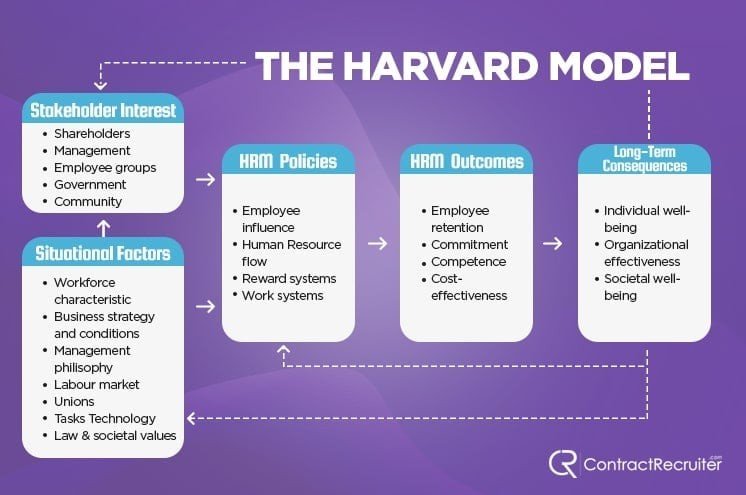
According to the Harvard framework of the HRM model, Unilever company focuses on the interests of stakeholders, situational factors, the policies of HRM, and the outcomes with the long-term consequences that affect the progress of the business.
Unilever company involves the employees in the process of decision-making either in the form of the individual as well as groups. Employee success and growth practices must be raised to achieve success and explore the change in the future. These values and core activities will be transformed to achieve success in the future. Unilever’s HRM develops the policies of employee influences, human resource flow, and the work or reward system to increase performance and employee motivation. So, this model is very effective in gathering success and obtaining a reliable or authentic change in the current or sustainable policies. The commitments, competencies, and cost-effectiveness are the key strategies that affect the business HRM activities.
Conclusion:
In this report, the role of cratering the organizational value for better success and profit is defined. Unilever is a selected multinational company that deals with the industry of fast-moving consumer goods. The company takes different initiatives for improving both consumer and employee growth related to talent development, customer success, and promotional strategies.
Improving the elements of the marketing mix will raise the internal flow of the processes and determine the core operations and what is required to make the change. The development of business decisions can be strongly managed to enhance the firm’s values and overall obligations. Different components help the company to manage the employees’ work practices and the consumer’s behavior. Unilever should adopt the market development strategy with the use of existing processes.